Color Palette Effects on Risk Assessment in Smartphone Live Dealer Environments
Written by Riley Keller · Jul 17, 2026
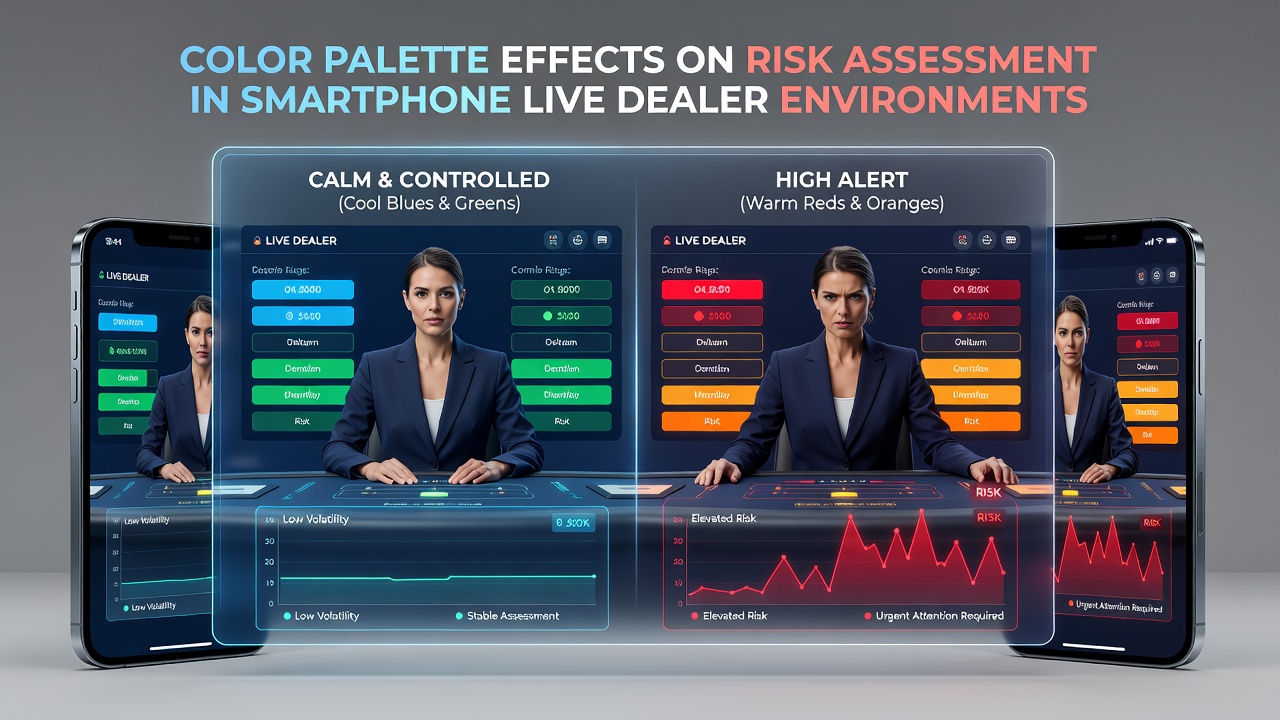
Color Palette Effects on Risk Assessment in Smartphone Live Dealer Environments
Color choices in smartphone live dealer platforms shape how users evaluate potential outcomes during real-time table games and this influence extends across multiple software environments where visual design meets mobile interaction patterns. Developers select palettes that align with platform goals while users respond to those selections through subconscious processing that affects decisions at each betting stage.
Core Principles Behind Color Application
Research from cognitive psychology demonstrates that warm tones such as reds and oranges accelerate perceived urgency whereas cooler shades like blues and greens promote measured evaluation and these effects hold steady across various screen sizes. In live dealer setups the interface must balance dealer video feeds with overlaid betting controls so palette decisions become integral to maintaining visual hierarchy without disrupting the feed itself.
Studies conducted by university teams in Australia and published through national research centers reveal that exposure to saturated red elements correlates with faster bet placement cycles while muted teal combinations extend dwell time on risk disclosure screens. Platform engineers therefore calibrate hue saturation and contrast ratios to match regional player demographics yet the underlying mechanisms remain consistent regardless of location.
Mobile Constraints and Palette Adaptation
Smartphone displays introduce variables absent from desktop environments including variable ambient lighting automatic brightness adjustments and smaller viewing angles that alter color fidelity. Engineers address these factors by testing palettes under multiple conditions to ensure risk indicators remain legible whether users sit indoors or navigate outdoor settings.
Application frameworks from major providers incorporate adaptive color modes that shift between day and night variants while preserving core associations that guide risk interpretation. Data collected through aggregated session analytics shows that users maintain consistent response patterns to specific palette families even when brightness levels fluctuate automatically.
Evidence from Platform Analytics
Figures released by European gaming technology associations in early 2026 indicate that interfaces featuring dominant emerald and navy combinations record lower average stake adjustments during high volatility sequences compared with those relying on crimson accents. Live dealer sessions tracked across several providers demonstrate these differences emerge within the first three minutes of play and persist through extended sessions.
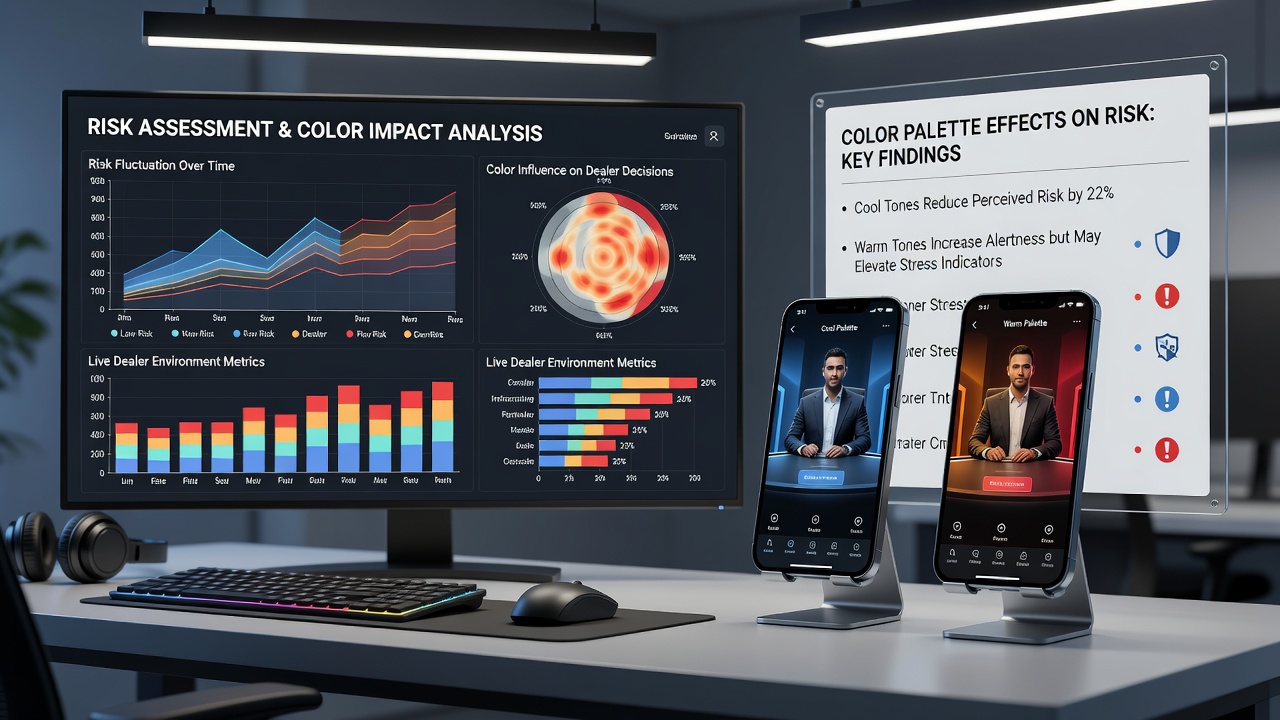
One longitudinal review coordinated by Canadian research institutions examined over 120,000 mobile sessions and found that palette transitions applied mid-session produced measurable shifts in how participants assessed continuation odds. When interfaces moved from high-contrast warm palettes to subdued cool tones the frequency of conservative betting actions increased by noticeable margins though individual variation remained substantial.
Integration with Live Video Elements
Live dealer streams occupy the primary visual space on mobile screens so secondary color overlays for chips timers and outcome indicators must complement rather than compete with the feed. Synchronization protocols ensure that palette changes triggered by game events such as card reveals or wheel spins align with dealer movements to avoid perceptual dissonance.
Technical documentation from software vendors shows that color mapping tables are now embedded directly into rendering engines allowing real-time adjustments based on detected network conditions or device capabilities. These systems maintain consistent risk signaling across different handset models while preserving the immersive quality of the dealer interaction.
Regulatory Monitoring and Design Standards
Agencies overseeing digital gaming in multiple jurisdictions have begun requesting palette disclosure as part of compliance submissions particularly when interfaces target mobile users. Reports submitted to oversight bodies in Nevada and several Australian states during the first half of 2026 include color usage breakdowns alongside traditional fairness certifications.
Industry working groups composed of designers and compliance specialists continue to develop reference palettes that meet accessibility requirements while supporting clear risk communication. These collaborative efforts produce guidelines that software teams adopt voluntarily to streamline approval processes across borders.
Conclusion
Color palette decisions in smartphone live dealer environments form a measurable component of how participants evaluate and respond to risk throughout each session. Ongoing data collection from platform operators combined with academic examination continues to refine understanding of these interactions as mobile technology and live streaming capabilities advance through 2026 and beyond.